

Australians are waiting an average of 466 days for medicines to become affordable and accessible on the PBS.
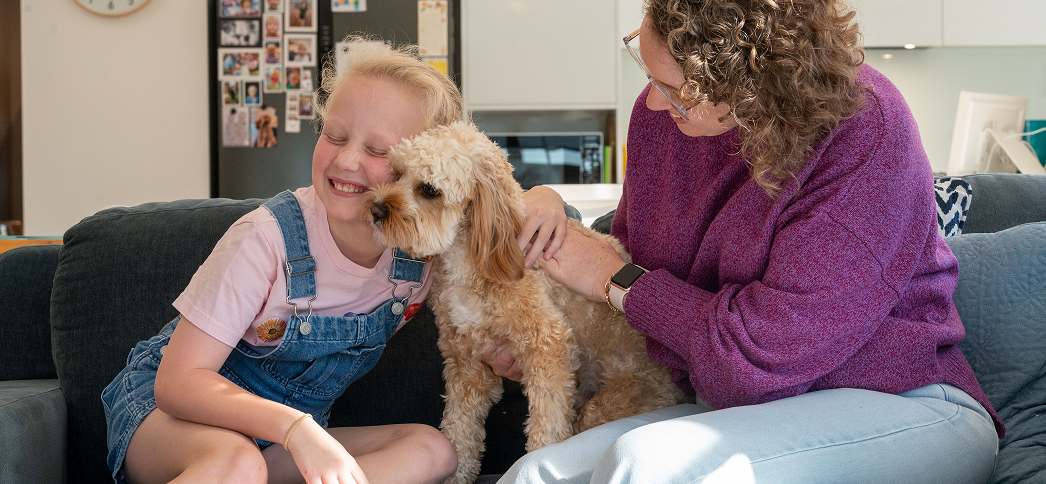
“Unless you’ve experienced it, you probably never think that a listing – just a medicine on a list – is really going to change someone’s life. But it did, and it does and it will.”
Millie’s story: Living with cystic fibrosis
When Millie was diagnosed with cystic fibrosis (CF) through the newborn heel-prick screening program in 2014, her family was told that the latest cutting-edge treatment approaches would not be available to their daughter.
Sadly, Millie did not qualify for the latest gene therapy or personalised medicines because she had the wrong gene mutation.
”At that point in time, it was really about treating the symptoms of Millie’s CF as opposed to having access to medicines that would treat the cause of her CF. Those kinds of medications just weren’t available to us.”
When Millie was five months old, the hospital informed her parents of a blind trial using an antibiotic to help reduce the inflammation in her lungs. Millie was on the blind trial for the first four years of her life and responded well.
”Millie was well while she was on the blind trial because the antibiotic prevented inflammation in her lungs.”
Thankfully, over recent years, new CF therapies that treat both the symptoms and causes of CF have emerged overseas.
“Three to four years ago, there was a really strong pipeline of medicines coming out of America. We knew that Australia was around two to three years behind in terms of their availability and accessibility through the PBS.”
For Millie’s mum, Sally-Anne, the wait has been excruciating.
“Waiting for Millie’s medicines was draining and exhausting. The process felt very complex, convoluted, bureaucratic, and administrative, beyond the realms of the everyday person.”
After years of waiting, Australian health regulators first approved the medication as safe and effective in March 2021. It then took more than a year to list it on the PBS, in April 2022. But even then, the PBS only made it available for children aged 12 and above.
“Once the medicine was listed on the PBS it felt as though we were one step closer, but it was still out of reach for us.”
You’re holding her health in your hands, doing everything you can to keep her well, and you just keep thinking, "Why are we waiting when every day counts?"
Millie and her family waited for another year before children aged between 6 and 11 years could access the medicine on the PBS. The burden of this was like a weight on Sally-Anne's shoulders.
“For a mother, it’s like torture. The mental load, fatigue and anxiety are enormous. All the while, we were doing everything in our power to keep the stress from Millie, who had enough on her plate.”
Sally-Anne, Millie's mum
Today, eleven-year-old Millie takes between 40 and 60 tablets a day to manage her condition, but she does so in her stride, and dreams big:
“I want to do everything. I want to be an astronaut but I don’t know if I can because I have cystic fibrosis. Perhaps a runner at the Olympics ... Or a footy player!”
Millie's energy is infectious, and her optimism inspires. As for her mother, well, she is a champion for Millie and for a Stronger PBS.
“It’s hard to convey to people how important this is. Unless you’ve experienced it, you probably never think that a listing – just a medicine on a list – is really going to change someone’s life. But it did, it does, and it will. We are living, breathing evidence of that.”

This is a story that Monica Ferrie knows all too well. As CEO of Genetic Support Network Victoria, Monica has seen patients with rare diseases, and their families, advocate for medicines, only to see them miss out due to age limitations.
"Sadly, some families will wait and wait for a medicine to be listed and then only see it listed once it is too late to help them. PBS listings are urgent because every single day counts for these patients and families. The unfortunate reality is that, after a disease reaches a threshold point, the medicine may no longer be of use."
Monica Ferrie - CEO of Genetic Support Network of Victoria